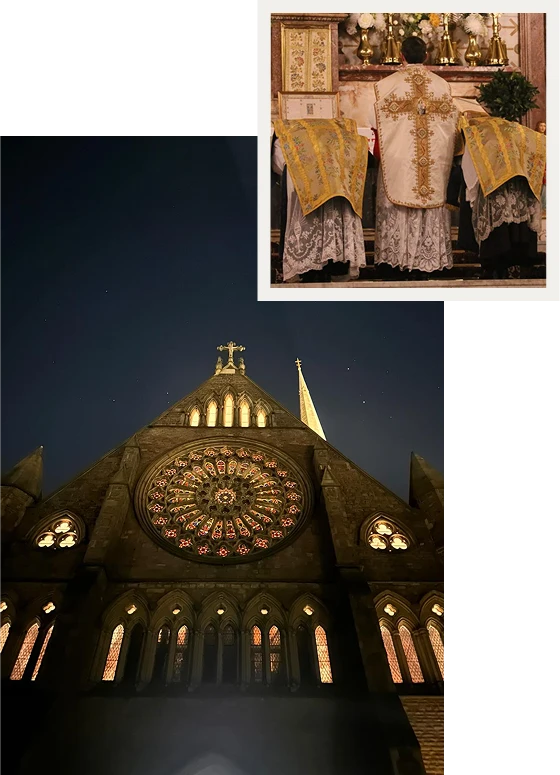
A Grade I listed Victorian church in the Maudlands district of Preston, known across Lancashire for the tallest parish church spire in England.
A landmark in Preston
The church and its history
St Walburge’s stands on ground with a much older story. The surrounding district takes its name from St Mary Magdalene — “Maudlands” is a corruption of it — and a twelfth-century leprosy hospital dedicated to the saint once occupied the site.
A church for a growing congregation
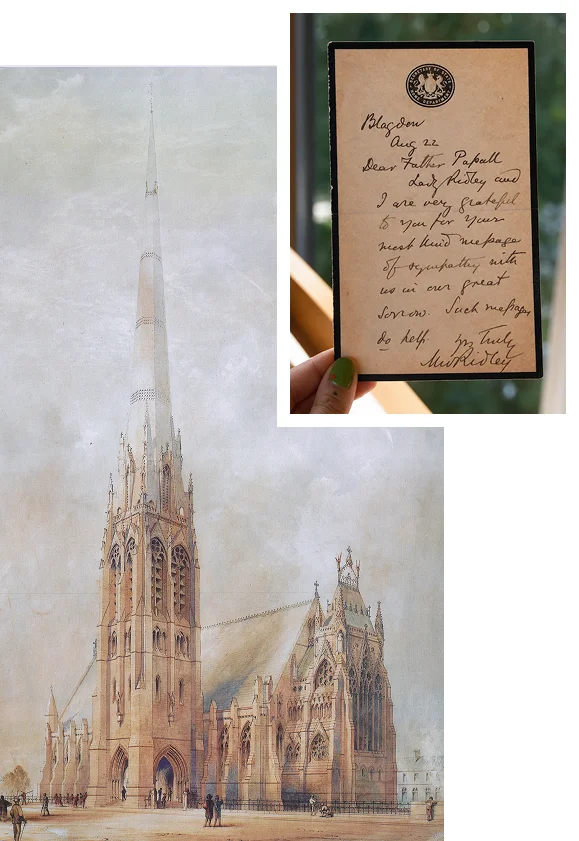
In 1847 the architect Joseph Aloysius Hansom was commissioned to design a large church for Preston’s Catholic community. The foundation stone was laid in May 1850, and after four years of building the church opened on 3 August 1854.
Hansom’s Gothic Revival design
Hansom — better known today as the inventor of the hansom cab — worked in a revived thirteenth-century French Gothic style. The result is a building of exceptional richness and scale: with room for a congregation of around a thousand, it is the largest non-cathedral Catholic church in the country.
Extended and enriched
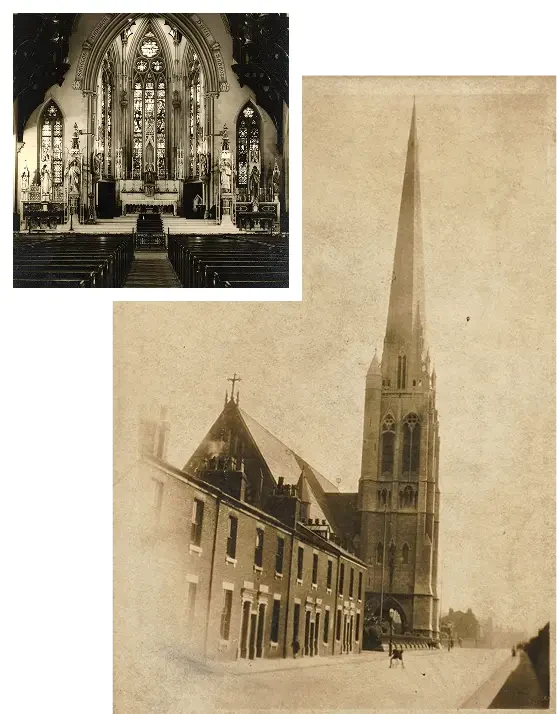
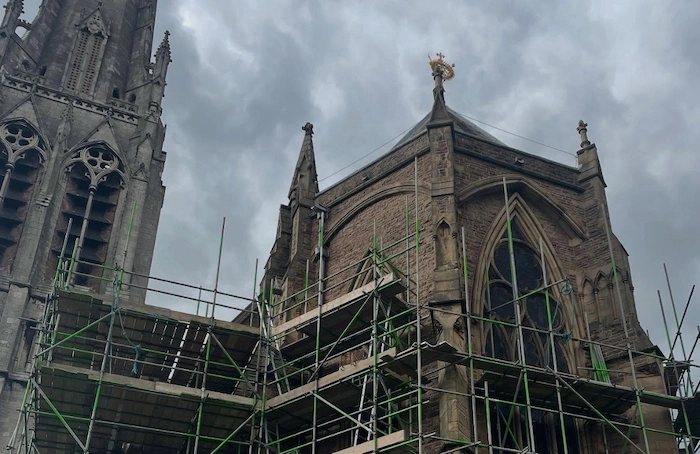
The church was extended in 1873 with the addition of a polygonal sanctuary, whose central window rises some eleven metres. Inside, a vast hammer-beam roof carries twenty-four life-sized carved and painted statues of saints.
The building
A spire that defines the skyline
Rising to 309 feet, the spire is the tallest on any parish church in England and, after Salisbury and Norwich cathedrals, the third tallest in the United Kingdom. It is among the tallest structures of any kind in Lancashire, and is reputedly built from limestone sleepers that once carried the Preston and Longridge Railway — which gives the stone its warm colour in low sun.
The bell and the tower
The bell chamber beneath the spire holds a single bell of 1.5 tonnes — the heaviest swinging bell in Lancashire. A pair of peregrine falcons return each summer to raise their young in the tower, which limits both ringing and access; the tower opens for public tours a few times a year.
The church today
A shrine church and a parish memory
In 2014 St Walburge’s was raised to a Shrine Church for Eucharistic devotion by the Bishop of Lancaster, and is now cared for by the Canons of the Institute of Christ the King Sovereign Priest.
Generations of Walburgians
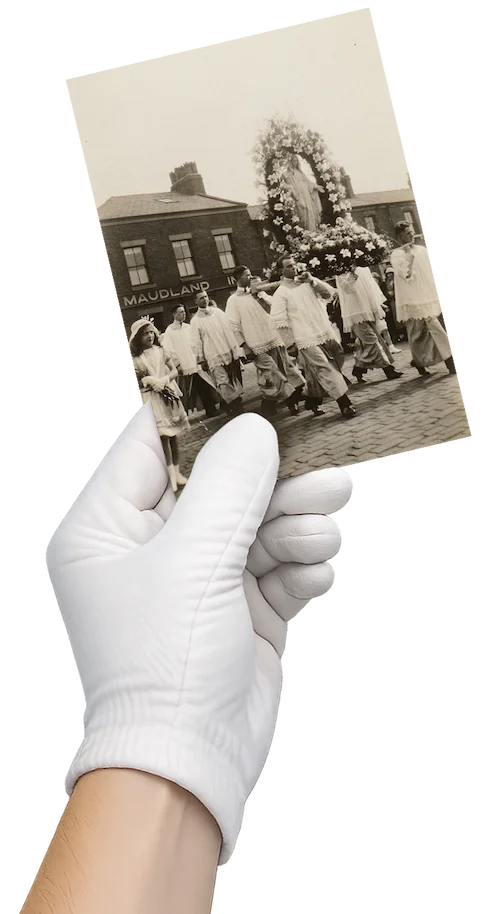
Alongside the building itself, the parish holds generations of memory: processions through Maudland, May crownings, school photographs and wartime service. Preserving that record is the work of the Sharing our Stories archive.
Explore further
Discover the archive
Photographs, letters, plans and parish records — catalogued by volunteers and free to browse online.